Lactobacillus Gasseri and Body Composition: The Real Data on a Gut Health Supplement for Weight Loss
Quick Answer: Does Lactobacillus Gasseri Change Body Composition?
A small number of twelve-week randomised trials, most of them run in Japan and Korea using specific named strains, reported that Lactobacillus gasseri was associated with modest reductions in abdominal fat area measured by CT scan, alongside body-weight differences of roughly a kilogram. Those differences were real in the statistics and small in practice, the studies were mostly funded by the companies that owned the strains, and measures drifted back toward baseline once people stopped taking the product. Treat it as a possible small assist rather than a gut health supplement for weight loss that does the work for you.
- Strain, not species: SBT2055 and BNR17 are what was tested. A label saying only Lactobacillus gasseri tells you very little.
- Scale of the finding: a few percent of measured abdominal fat area, and around a kilogram on the scale over twelve weeks.
- What faded: follow-up measurements after the product stopped moved back toward the starting point.
This is one of the better-documented stories in the probiotic aisle, which is a low bar and still worth clearing. There are actual randomised trials with actual imaging endpoints, not just a mouse study and a press release. The honest reading sits somewhere between the marketing and the eye-roll, so here is what was measured, by whom, and how much of it should change what you do.

What Lactobacillus gasseri is, and why its name keeps changing
Lactobacillus gasseri is a lactic acid bacterium native to humans. It turns up in the small intestine, in breast milk and in the vaginal microbiota, which is unusual for a species that also gets used in dairy fermentation. Being a human-adapted resident is part of why researchers picked it: a species that already lives in people has a plausible claim to surviving the trip through one.
The naming confusion is worth two minutes because it explains a lot of mismatched labels. In 2020 the genus Lactobacillus was formally split into twenty-five genera after genomic analysis showed it had become a dumping ground for barely related organisms. Familiar names moved: L. rhamnosus became Lacticaseibacillus rhamnosus, L. plantarum became Lactiplantibacillus plantarum, L. reuteri became Limosilactobacillus reuteri. Gasseri is one of the species that kept the original genus name, so for once the label on the bottle and the name in the paper still match.
What does not match, routinely, is the strain. Strains within a species can differ from each other about as much as breeds of dog differ in temperament. L. gasseri CP2305 has been studied for stress and gut-brain endpoints that have nothing to do with body composition. Different strain, different research question, same three words on the front of the packet.
The trials that started this
The line of work most people are quoting began in Japan with a strain designated SBT2055, sometimes written LG2055, owned by a dairy company. Adults with excess abdominal fat drank a fermented milk containing the strain, or a matched fermented milk without it, daily for twelve weeks. The primary measurement was abdominal fat area on CT imaging — a considerably better endpoint than a bathroom scale, because it distinguishes visceral fat from everything else.
The group taking the strain came out with lower abdominal fat area than the control group, and a small difference in body weight and waist circumference. A later trial by the same group tested lower daily doses and reported the pattern held. A separate line of Korean research on a strain called BNR17, delivered in capsules rather than milk, likewise reported reductions in waist measurements and visceral fat over twelve weeks, with little dramatic movement on the scale.
Two things about the funding and the population need saying out loud. Most of these trials were sponsored by the owner of the strain, which does not make them wrong but does make independent replication important, and there has not been much of it. And the participants were mostly Japanese and Korean adults whose average starting body mass index was lower than a typical North American sample, so how well the result travels is an open question rather than a settled one.
How big were the differences, really
This is the part marketing leaves out. Over twelve weeks, the body-weight difference between groups was in the region of a kilogram, and the abdominal fat area difference was a few percent of the measured area. That is a genuine signal. It is also, for most people, roughly the difference a fortnight of consistent walking and slightly smaller dinners would produce, and it costs nothing.
Context makes it concrete. Structured diet and activity programmes of the kind run in large government-funded trials aim for something in the region of five to seven percent of body weight over a year, sustained by ongoing support. Prescription weight-management medicines, supervised by a clinician, operate at a scale well beyond either. A probiotic strain sits at the small end of that range and should be priced, in effort and expectation, accordingly.
| Approach | Typical study length | Typical scale of difference | Strength of evidence |
|---|---|---|---|
| L. gasseri SBT2055 in fermented milk | 12 weeks | Around a kilogram of body weight; a few percent of abdominal fat area | Small randomised trials, mostly funded by the strain owner |
| L. gasseri BNR17 in capsules | 12 weeks | Waist and visceral fat measures; little scale movement | A handful of randomised trials in one region |
| Multi-strain probiotic blends | 8–12 weeks | Small and inconsistent between studies | Pooled analyses are heterogeneous; publication bias likely |
| Structured diet and activity programme | 6–12 months | In the region of 5–7% of body weight | Large, long-running, publicly funded trials |
| Clinician-prescribed weight medicines | 12 months or more | Substantially larger than any of the above | Large phase 3 programmes; medical supervision required |
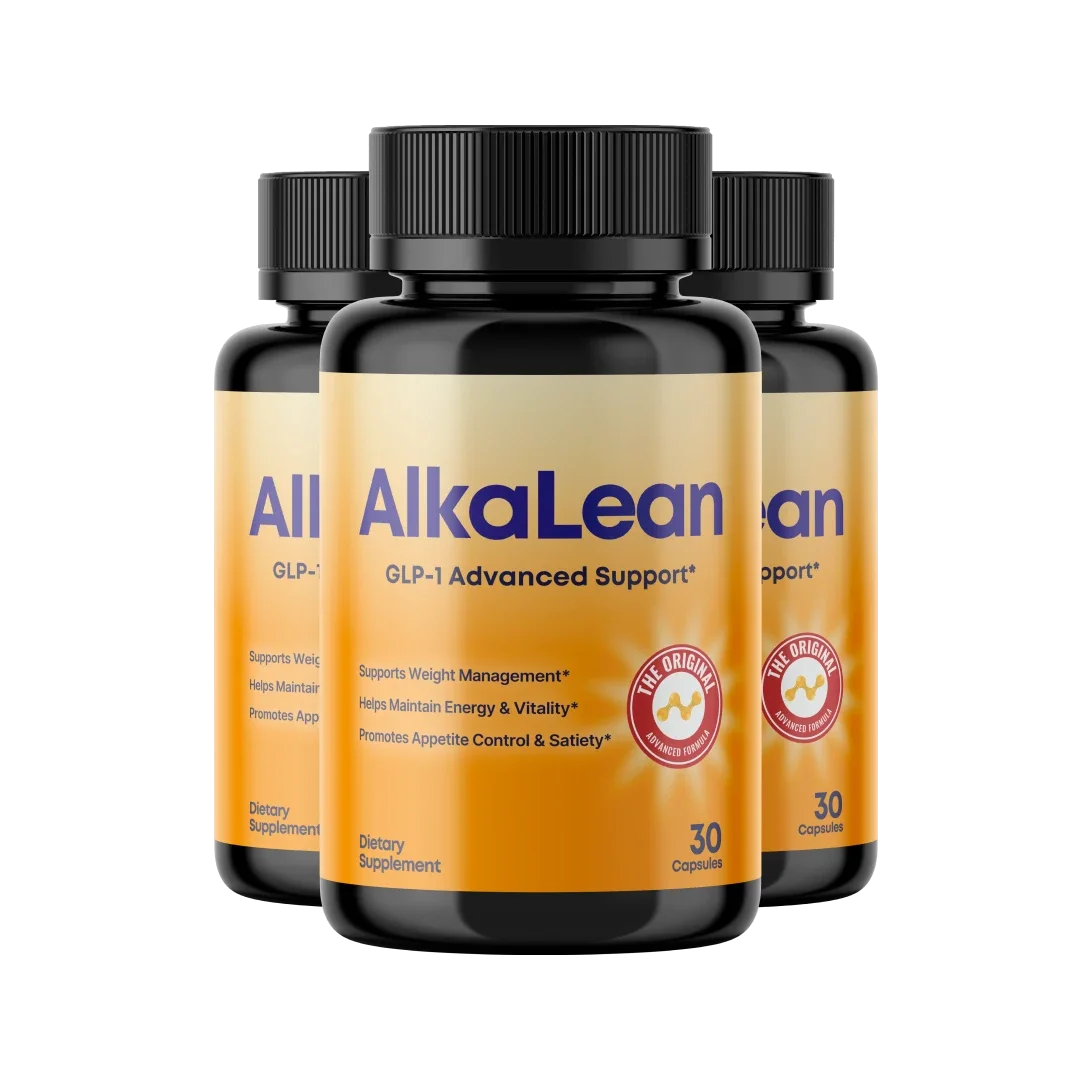
Comparing options in the weight-management aisle?
AlkaLean is an apple cider vinegar and BHB formula rather than a probiotic. The official store page carries the current AlkaLean price, the single-bottle option and the 60-day money-back terms.
Get OfferStrain specificity: why the species name tells you almost nothing
If you take one practical thing from this page, take this. Evidence attaches to a strain, a dose and often a delivery format — not to a species. The Japanese trials used a specific strain in fermented milk at a stated daily cell count. A capsule labelled simply Lactobacillus gasseri, from an unnamed strain, at an unstated count, has borrowed the headline and left the evidence behind.
The format question is not pedantry either. Fermented milk carries protein, calcium and a food matrix that may protect cells through the stomach, and it is consumed as part of a meal. Whether the same cells behave identically when freeze-dried into a capsule and swallowed on an empty stomach is an assumption, not a finding. Some strains survive the trip better than others, and few products publish anything on the question.
Then there is the count. Colony-forming units should be guaranteed through the end of shelf life, not measured at the moment of manufacture, and the difference between those two numbers can be an order of magnitude by the time a bottle reaches a warm shelf in a warehouse.

Choosing a gut health supplement for weight loss
Searches for the best gut health supplement for weight loss return a wall of near-identical bottles, so here is a short filter that removes most of them. Look for a full strain designation, not just a genus and species. Look for a cell count guaranteed at expiry. Look for a dose that matches what was actually studied, rather than a number chosen because it is large. Prefer a short, fully-disclosed formula over a proprietary blend that hides the amount of every individual strain behind one combined figure.
Two more filters. Third-party testing tells you the contents match the label, which is not a given in this category. And storage instructions are a signal: a product that says nothing about heat or moisture is either unusually stable or unusually unbothered.
The demographic-targeted versions — the best gut health supplement for women over 40, the men's formula, the menopause formula — are almost always the same strains in different packaging. If the strain list and the counts are identical, so is the product. Read the panel, not the front.
A supplement that works small and honestly is a reasonable purchase. A supplement that works small and is sold as though it works large is a problem regardless of the science behind it.
What this cannot do — the limits
It cannot treat obesity, and no supplement may claim to. Nothing here diagnoses, treats, cures or prevents any disease, and if a page tells you otherwise about any probiotic, that page is not complying with the rules it is supposed to follow.
The evidence has four specific weaknesses worth naming. The trials are small, typically dozens rather than hundreds of participants. They are short, twelve weeks against a problem measured in years. They are concentrated in two countries and largely funded by the companies holding the strain patents. And the effect appears to be contingent: when the product stopped, follow-up measurements moved back toward baseline, which is what you would expect from organisms that do not permanently colonise.
There is also the file-drawer problem. Pooled analyses of probiotics for body weight report small, inconsistent effects with signs that null results are under-published. When the average effect across many strains is close to nothing, a striking result from one strain deserves replication before it deserves your money.
Finally, the practical limit: nothing in this literature works without the rest of it. Every trial ran on top of participants' ordinary diets, and none of them tested a probiotic against a diet change. It is an addition, at best.
Where AlkaLean fits — honestly
It is not a probiotic, and we are not going to blur that. AlkaLean is a once-daily weight-management formula built on apple cider vinegar and BHB salts, and it contains no Lactobacillus gasseri whatsoever. If a probiotic strain is specifically what you are after, this is not the product and no amount of adjacent gut-health language changes that. The same caution applies across the category: see what probiotics actually do for weight loss, the proof-of-concept work on Akkermansia muciniphila, and the different case of Saccharomyces boulardii, the yeast probiotic.
What the two do share is a category and a set of honest limits. The AlkaLean label publishes no milligram figure for any of its named ingredients, which makes a like-for-like comparison against a dosed competitor genuinely hard, and we would rather write that down than gloss it. The same standard we applied to the gasseri trials above applies here: state what is measured, state what is not, and let the reader decide.
The bottom line
Specific strains of Lactobacillus gasseri have produced small, measurable differences in abdominal fat in twelve-week randomised trials, which is more than most ingredients in this aisle can say. The differences were modest, the research base is narrow and largely industry-funded, and the effect appears to depend on continuing to take it. If you want to try it, buy a named strain at a stated count, give it three months, measure your waist rather than only your weight, and keep your expectations proportional to a kilogram.
Medical note: this article is general wellness information, not medical advice, and it summarises published evidence rather than making a product claim. Dietary supplements are not drugs and are not intended to diagnose, treat, cure or prevent any disease. Speak to a healthcare professional before starting any supplement, particularly if you are pregnant, nursing, immunocompromised or taking medication.
Frequently asked questions
Does Lactobacillus gasseri actually reduce belly fat?
A small number of twelve-week randomised trials, mostly run in Japan and Korea with specific strains, reported reductions in abdominal fat area measured by CT scan compared with placebo. The differences were statistically real and practically small, the trials were mostly funded by the companies that owned the strains, and they have not been repeated at scale elsewhere. It is fair to call it promising and unfair to call it proven.
How long does Lactobacillus gasseri take to do anything?
The trials that reported changes ran for twelve weeks, and most measured nothing meaningful at the halfway point. If you are trying it, judge it over about three months rather than three weeks, and measure your waist rather than only the scale, since abdominal fat area was where the reported differences showed up first.
Is Lactobacillus gasseri safe to take every day?
For most healthy adults, lactobacilli have a long record of routine use in fermented dairy and are generally well tolerated, with mild bloating or gas in the first week being the common complaint. People who are immunocompromised, critically ill, fitted with a central venous line, pregnant or nursing should ask a clinician first, because live microbial products are not a casual decision in those situations.
Does the effect last after you stop taking it?
The evidence suggests not. In trials that kept measuring after the product was withdrawn, the body composition measures drifted back toward where they started within a few weeks. These strains do not permanently colonise the gut, so any effect appears to depend on continuing to take them, which is worth factoring into what you spend.
References
- Kadooka Y, et al. — Effect of Lactobacillus gasseri SBT2055 in fermented milk on abdominal adiposity in adults in a randomised controlled trial (Br J Nutr, 2013)
- NIH Office of Dietary Supplements — Dietary Supplements for Weight Loss
- Harvard Health Publishing — Should you take probiotics?
- Mayo Clinic — Weight loss: strategies for success
- NIH NIDDK — Weight management
Related reading
See the current AlkaLean offer
A single-bottle tier is the cheapest way to find out whether a daily formula suits you before committing to a bundle. Pricing and the 60-day money-back terms are on the official store page.
Get Offer